
Pp 69- 70
Valeria Pomini, PhD
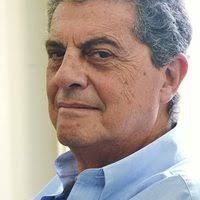
Rarely have I felt such a profound sense of grief over the passing of someone I had never met in person. This happened with the sudden news of Paolo Gritti's departure last summer. Paolo Gritti was a psychiatrist, psychotherapist, psycho-oncologist, and former Assistant Professor at the University of Campania "Luigi Vanvitelli". He was the Past President of a couple of scientific associations in Italy, Vice President of the National Council of Systemic-Relational Psychotherapy Schools, a teaching member and supervisor of SIPPR (Societa’ Italiana di Psicologia e Psicoterapia Relazionale), and co-founder of the “ECOPSYS” School of Systemic Psychotherapy in Naples[1]. He was also the founder and Chief Editor of the Journal of Psychosocial Systems, as well as the Director of the Italian Journal of Psycho-oncology and a member of the editorial committee of the Archives of Depression and Anxiety. Paolo contacted me a couple of years ago, and since then we shared an intense exchange of messages, phone calls, and ideas. First and foremost, we launched a collaboration between our journals: the Journal of Psychosocial Systems, an online, open-access journal that publishes articles in Italian or English, and our journal Systemic Thinking & Psychotherapy. I was delighted to accept his invitation to join the Scientific Board, and I submitted my first contribution over a year ago[2], with the intention of translating one of Paolo's articles into Greek and English for this journal. Later on, I was invited to the conference titled "Per le liquide vie. Il viaggio ventennale di ECOPSYS sulla rotta per Itaca" (Through Liquid Ways: ECOPSYS's Twenty-Year Journey on the Route to Ithaca), which provided a precious opportunity for reflection and discussion regarding the twenty years of ECOPSYS's cultural, clinical, and training voyage. As stated in the conference's introductory text, "the metaphor of the journey 'through liquid ways' – inspired by Odyssey – became a key to interpreting therapeutic work and the complexity of contemporary relationships: families, couples, generations, and cultural contexts were analysed as territories to be explored, crossed, and understood." Unfortunately, I missed the opportunity to attend the conference in person and finally meet Paolo and his team. Contracting Covid a couple of days before my trip prevented me from flying to Naples, which leaves me with even greater regret in hindsight for not being able to know Paolo in person. However, I was still able to participate online and present my paper titled "Odysseus's Scar. The psychotic symptom revealing trauma?", and above all, to follow the other speakers and Paolo's inspiring keynote opening speech. Even during his last month of life, while facing the illness that was consuming him, Paolo never stopped working and thinking about new projects. I was unaware that he was sick; we exchanged messages about future projects up until two days before his death. The subsequent silence did not surprise me, as it coincided with the summer holidays, and we were undoubtedly going to get in touch in September. Instead, I received a message from a colleague at ECOPSYS and learned of his passing with great sorrow. Paolo Gritti has left an immense void for his family, his collaborators, his students, and the Italian and international systemic community. His approach, which inspired the educational and scientific activities of ECOPSYS, is defined as "culturalist". As the School's website states, "Cultural family system therapy is rooted in the integration of three main theoretical traditions: family systems theory, cultural family studies, and multicultural psychology. It expands this perspective by incorporating the concept of the 'cultural genogram', a tool that allows for mapping not only transgenerational family relationships but also cultural heritages and acculturation processes. It offers a theoretical-clinical synthesis by exploring the intersection of culture and system in family therapy, arguing that family systems cannot be understood independently of created the cultural contexts that generate them. Shared meanings within families are always culturally mediated, requiring therapists to develop a 'double vision' that simultaneously takes into account universal systemic dynamics and specific cultural particularities".
I will always be grateful to Paolo, who created for us a new bridge to Naples, a unique city that I love, and established a new collaboration with the ECOPSYS systemic community, which I am certain will continue in the future, forging new bonds of editorial twinning, scientific dialogue, and exchange.
We will deeply miss his elegant presence, his brilliant yet rigorous mind, his inspiring words, and his enthusiasm.
[2] Pomini, V. (2024). Dropouts, unsuccessful therapies, and other 'stumbles' in systemic therapy. Journal of Psychosocial Systems, 8 (1), 1-16. https://doi.org/10.23823/58859v19