
Systemic Thinking & Psychotherapy Iss: 28 pp. 60-62
Written by: Ioanna Anagnostopoulou, Mental Health Nurse, MSc
Family Therapy Unit, Integrated Mental Health Care Unit of Attica.
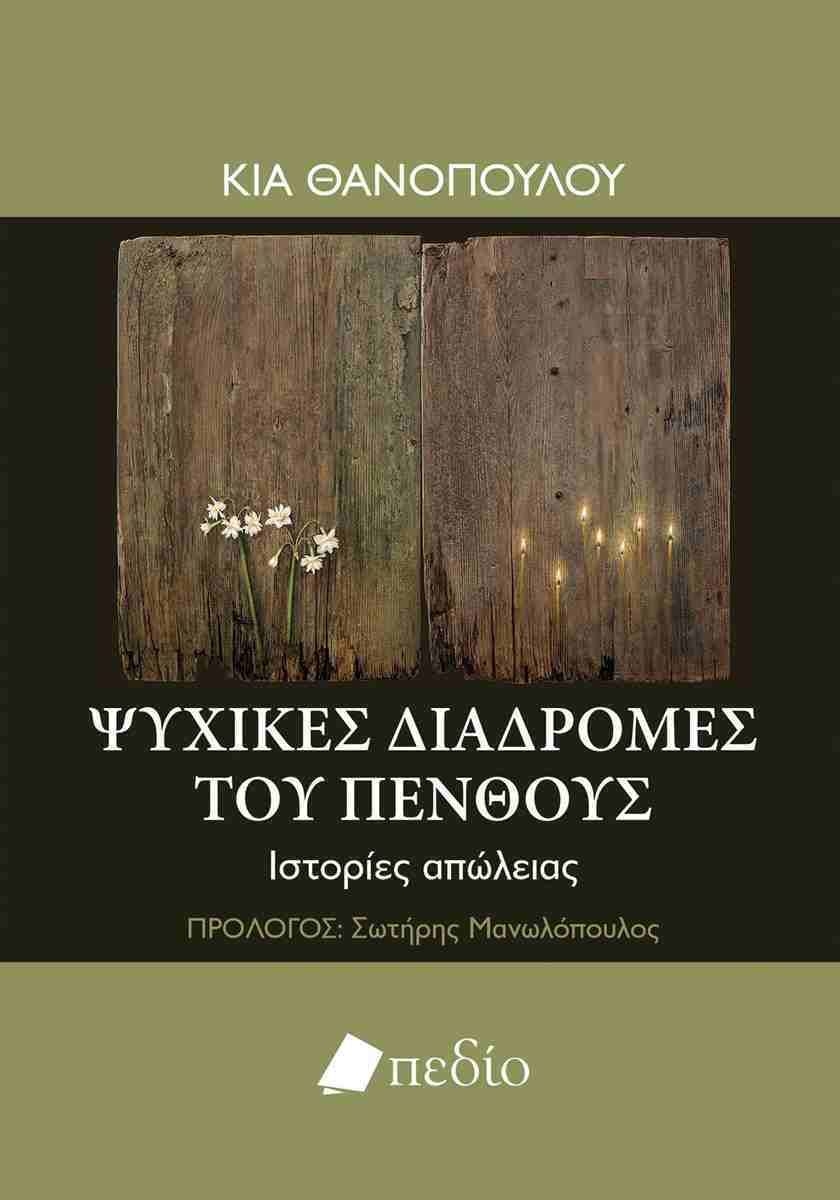
Kia Thanopoulou’s book “Psychic Pathways of Grief”, published by Pedio Publications, explores experiences of loss and mourning through clinical notes, illustrative examples, and narratives drawn from her therapeutic work at the Family Therapy Unit, reflecting many years of clinical practice. The book constitutes a valuable guide to understanding and managing the pain of loss and the sudden disruptions of life. It invites readers to reconsider the importance of the value of life itself.
The book opens with Freud’s famous quote, “If you want to endure life, prepare yourself for death” and, as the author herself states, “there is no life without loss. Although death is a central theme, the book ultimately addresses the experience and meaning of life”.
The book is structured into six chapters. Each chapter incorporates material from personal clinical notes, previous writings that the author subsequently reworked, as well as research findings and professional knowledge accumulated throughout her therapeutic career.
The first chapter focuses on grief, loss, mourning, and the search for meaning through the grieving process. Drawing on clinical material from individual psychotherapy sessions and from a grief support group coordinated by the author at the Family Therapy Unit in December 2010, the chapter examines key concepts such as attachment, separation, loss, and grief. Particular emphasis is placed on consolation, care, empathy, and compassion. The role of the therapist is conceptualized as that of a companion or fellow traveler who accompanies the grieving individual—sometimes through silence and sometimes through dialogue—supporting adaptation to a new reality in which the significant other is no longer present.
The second chapter addresses the collective crisis experienced during the COVID-19 pandemic and the forms of grief that followed. The experience of loss during this period fundamentally challenged established assumptions: physical closeness to loved ones ceased to be associated with safety, while distance and isolation became necessary protective measures. The chapter highlights how restrictions preventing family members from being present during illness and death—being unable to touch or say farewell to their loved ones—complicated the grieving process. Feelings of guilt emerged as a dominant emotional response among relatives who perceived that they had left their loved ones to die alone and without care. At the same time, the pandemic revealed a renewed appreciation for life and an intensified need for meaningful interpersonal bonds within this collectively traumatized community.
The third chapter examines illness and the diagnosis of a family member with a physical disease. It explores how life is abruptly disrupted and divided into a “before” and an “after”, and how the entire family system is affected, mirroring the suffering of the ailing body. As the author notes, “there is a life that was occurring before the loss and a life that follows it”. Through the presentation of a family therapy case, the chapter illustrates how the involvement of all family members in treatment can facilitate the emergence of new meanings regarding illness and life, enabling the family to continue its developmental trajectory. Social support is identified as a key factor, consistently highlighted in research as contributing positively to the course of chronic illness and to the promotion of public health.
The fourth chapter addresses homicide as a form of traumatic loss through a clinical case presentation. Grief resulting from such an extreme and violent event may evolve into unresolved or unprocessed grief. While grief may exist without severe trauma, intense trauma cannot occur without grief. Traumatic loss may remain unresolved and inhibit the individual’s capacity to reconcile with the loss. Homicide constitutes an unnatural, violent, and socially stigmatized way of dying. The chapter discusses the devastating psychological consequences for children who witness the extremely traumatic event of the killing of one parent by the other. Through the narrative of Anna’s case, the author illustrates the lived experience of traumatic loss, delayed mourning reactions, and the repression of unbearable emotional states, which may be transmitted across generations, as well as how the grief following a traumatic loss becomes unresolved and prevents the grieving person to seek and find a way to reconcile with their loss.
Empirical studies indicate that although many individuals exposed to childhood traumatic stress demonstrate resilience and do not develop long-term psychopathology, a significant proportion may exhibit persistent symptoms in adulthood. In such cases, the clinical picture may be described as complicated grief or traumatic grief, currently described as Prolonged Grief Disorder, characterized by unresolved, maladaptive, and pathological grief responses. The chapter emphasizes the therapist’s responsibility to establish a safe therapeutic framework and to accompany the client through the intertwined processes of grief and trauma.
The fifth chapter explores unresolved grief, remnants of early attachment experiences, and romantic partner selection. Through a further clinical narrative, the author demonstrates how maternal loss during adolescence may complicate identity formation and influence later relational choices, given the central role of the mother–daughter relationship in the development of female identity and sexuality, followed by paternal and later romantic relationships.
The sixth chapter addresses silent grief, unspoken traumatic experiences, and intergenerational transmission. Entitled “From There and Then to Here and Now”, it functions as a concluding synthesis of the book’s core themes. The chapter underscores that experiences acquire meaning when they are symbolized through language and narrative. There are also, however, experiences that remain in unspoken oblivion. These untold experiences that have not been a subject of discussion, do not become a story, they remain inside the psyche of the person that experienced them, affecting their identity, and that of the subsequent generations. Silence is often laden with unarticulated stories that shape how individuals construct—or fail to construct—meaning around significant life events.
Through clinical material, the author illustrates how unprocessed trauma may be transmitted intergenerationally, manifesting as psychological symptoms or repetitive behavioral patterns. The therapeutic task is presented as facilitating the liberation of individuals from the constraining effects of the past, enabling them to actively participate in shaping their own life narratives. As the author emphasizes, every experience of grief constitutes a wound that must be opened in order to heal; it must be given space within words, emotions, thoughts, and meanings, transformed into a narrative, and integrated into the continuity of one’s personal history.
Having known Kia Thanopoulou for many years, I wish to offer a personal reflection, having witnessed her sustained effort, dedication, and emotional investment from the inception to the completion of this book. It represents a work that is both personal and professionally rigorous. While firmly grounded in scientific knowledge, the book is written in accessible language and is addressed not only to mental health professionals but also to laypersons who carry their own grief.
The text is enriched by references to literature, poetry, and theatre, interwoven with clinical narratives, professional expertise, and the author’s sensitivity toward trauma and human suffering. What is particularly compelling is the sense of dialogue created between classical and contemporary literary figures and ordinary individuals who have experienced loss. Writers and literary characters—from Papadiamantis and Elytis to Chekhov, Pessoa, Shakespeare, Rooke, Polydouri, Dimoula, Karapanou, Tsalikoglou, Beckett, Mrs Dalloway of Virginia Woolf, The Little Prince of Antoine de Saint-Exupéry, Eliot, and Zorba of Kazantzakis—appear to converse with the book’s clinical protagonists, Sonia, Antigone, Chloe, Ismene, Daphne, Helen, Anna, Eva, Margarita, Claire, forming a shared narrative space of mourning and meaning-making.
Having finished reading Kia Thanopoulou’s book, I find myself returning to the first page, where her dedication appears in my copy. To her words, “...it is as if we grew up together”, I would like - with her permission - to add: “all that we bid farewell to together, it is as though we mourned it together”.
I wish Kia’s book a smooth and meaningful journey, one that may be comparable to the path of her long-standing psychotherapeutic work.
Dear Kia, the second story in the first chapter, in which parents bid farewell to their son at the airport as he leaves to pursue his studies far from home, deeply touched me.
I believe that readers of the book will encounter a story that will evoke a similar emotional response.
Thank you.